
HOSTING
Managed cloud hosting, VPS, deployment, SSL, professional email, secure remote access, and tested disaster recovery — one partner across the whole stack.
MrZaKaRiA HOSTING
Cloud hosting and infrastructure built for businesses that need their digital systems to stay up, stay secure, and stay easy to operate. Hosting, VPS, domains, SSL, branded email, deployment pipelines, off-site backups, and remote access run under one roof — with a flat monthly run cost and a single point of contact. Below the overview, four deep-dive guides cover the parts most teams need help with: self-hosting business tools, reaching internal services without a static IP, building a disaster-recovery posture that actually restores, and shipping email that lands in the inbox.
Memory (RAM)
up to 2TB
Bandwidth
1 to 50Gbps
Uptime
99.99%

Experience the power of a cloud-based web and app hosting service designed to take your business to new heights. The service offers a robust and reliable platform for your digital needs, eliminating the hassle of managing and updating your hosting environment. With state-of-the-art technology, web and app performance is optimised, secure, and up-to-date. The technical operations are handled end-to-end so you can focus on what matters most — your business. Embrace the future with a managed hosting service where everything is taken care of for you. It's not just hosting, it's peace of mind.
There's only 2 simple Plans:



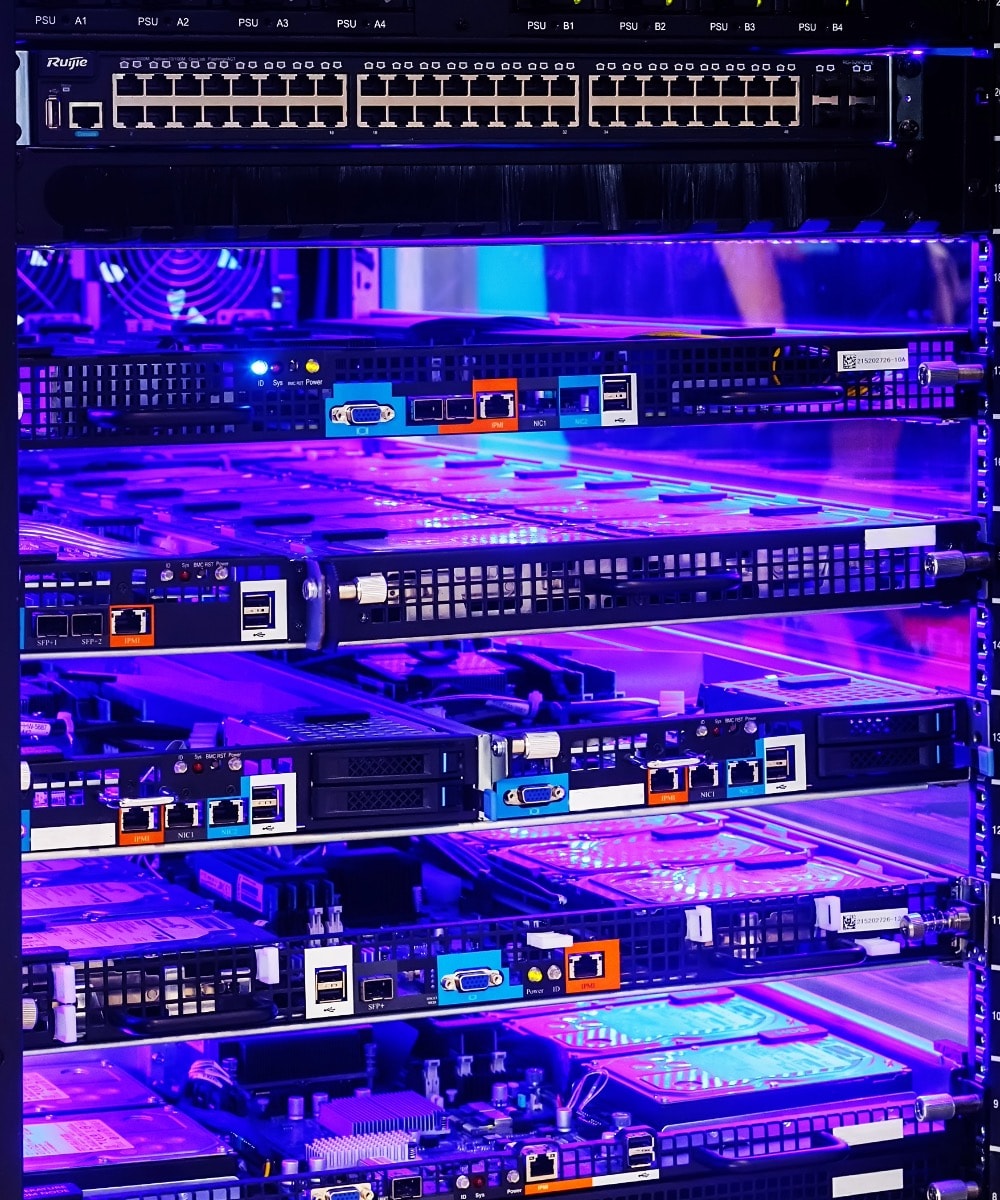

Discover the advantage of local infrastructure server building and backup services. The complete solution includes firewall protection, VPN access, and a dedicated mailing server. Servers are built and managed for optimal performance and security. With backup servers, your data is safe and recoverable in the event of any unforeseen circumstances. Firewall and VPN services offer an additional layer of security, protecting your network from external threats and ensuring secure remote access. The mailing server solution provides a reliable and efficient communication platform for your business. It's not just a service, it's a commitment to providing secure, reliable, and efficient infrastructure.
Login and check plans
DEEP DIVES
Four guides into the parts that matter
Each guide is a standalone, fully-scoped explanation of one part of the infrastructure stack — written for the people who actually have to make the decision and live with the result.
Self-Hosted Business Tools on VPS
Deploy your own CRM, ERP, file storage, and team apps on a private VPS. Full data ownership, no per-seat fees, no vendor lock-in.
Read this guide →Secure Remote Access Without a Static IP
Reach office servers, NAS, and home labs from anywhere using Cloudflare Tunnels — no static IP, no port forwarding, no exposed ports.
Read this guide →Disaster Recovery & Backup Solutions
3-2-1 backups, off-site replication, ransomware-resistant snapshots, and tested recovery for business-critical systems.
Read this guide →Domain Name & Professional Email Setup
Register a domain, configure SPF/DKIM/DMARC, set up branded mailboxes, and ship email that lands in the inbox — not the spam folder.
Read this guide →FAQ
Frequently asked questions
Answers built for decision-makers who need clarity before committing.
Domain registration, DNS, SSL, professional email, VPS or cloud server provisioning, deployment pipelines, monitoring, off-site backups, and the operational layer that keeps it running. The service is sized to the business — a single static site at one end, a multi-tenant application stack at the other — but the goal is the same: the team focuses on the product, not the host.
Do I need to migrate my existing setup, or can you build alongside it?
Either pattern works. Most engagements run in parallel for a short cut-over window — the new infrastructure is provisioned, the migration is staged and validated, then traffic moves over with a DNS change. There is no requirement to tear down what you have before the replacement is verified.
How is this priced?
Infrastructure pass-through (the actual VPS, cloud, domain, and email costs) is billed at cost. The managed-service component is a flat monthly figure scoped to the size and complexity of the stack. There are no per-seat fees and no surprise overages — the monthly run cost is known before the work starts.
What if something breaks at 2 AM?
Incident response is part of the service for every business-critical system. Monitoring fires alerts, the on-call playbook fires the right runbook, and recovery follows the documented disaster-recovery plan — local snapshot first, off-site if the local copy is gone, full rebuild if the host is gone. Recovery objectives (RTO and RPO) are agreed up front per system, not invented during the incident.